

Blog
Floor Sweeper or Scrubber-Dryer? Which Solution Fits Your Space

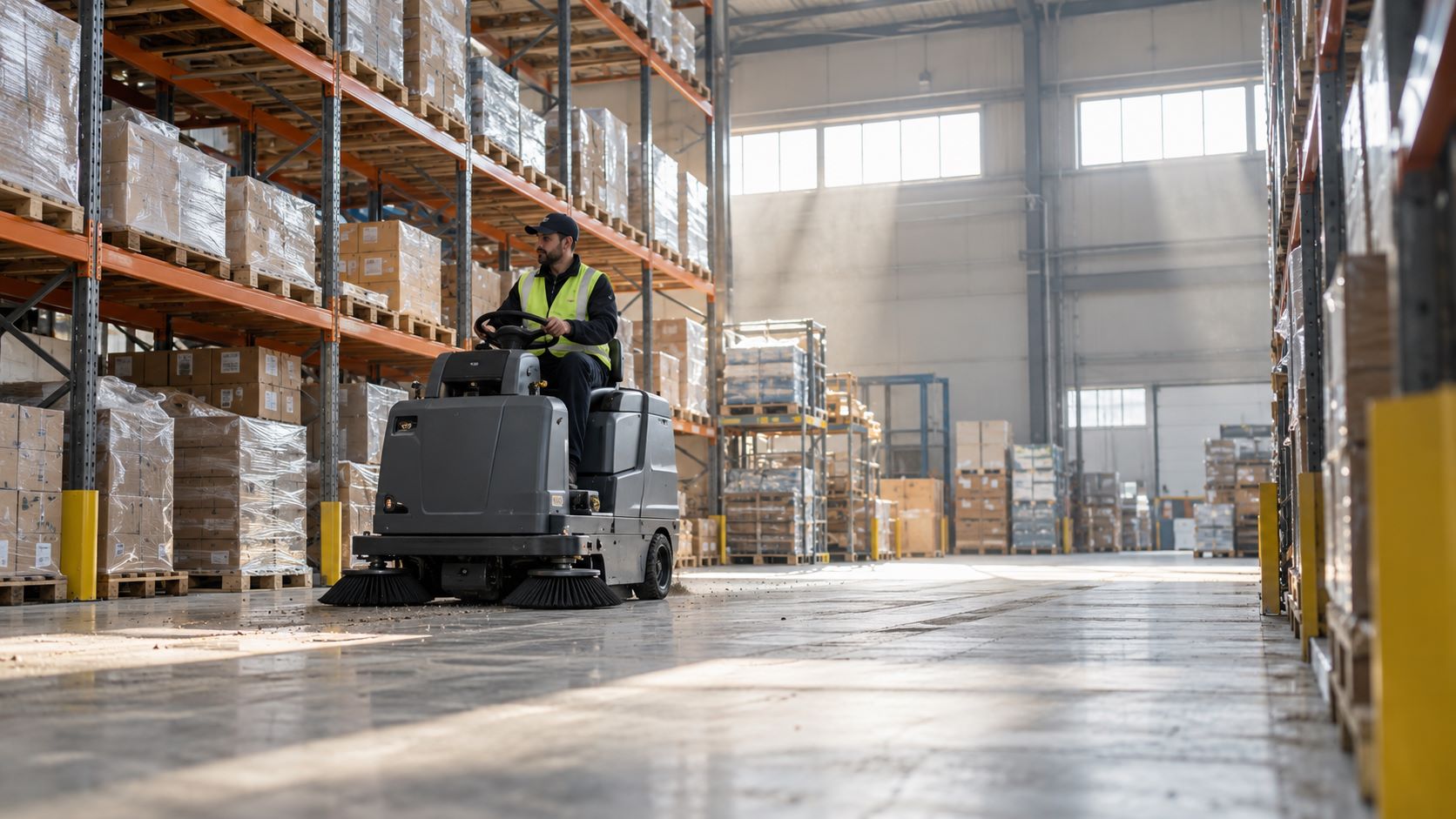
You have taken over a 5,000 sqm warehouse or production hall. The floor looks clean in the morning, but after the first shift you can see dust, sand carried in on forklift wheels and leftover packaging. Your cleaning contractor suggests daily washing, while a colleague recommends a floor sweeper. Both have a point. Still, the two types of machine solve different problems, and a wrong choice is paid for in maintenance costs, lost time and floors that never end up clean.
The short answer: it depends on the type of dirt, the surface area and how the space is used. In this article we go through the criteria we use when advising customers: what each machine does, where it delivers results, where it has limits and when you need both.
What Each Machine Does and How They Differ
The two categories of equipment are not variants of the same machine. They work on different principles and deal with different kinds of dirt.
The Sweeper: Lifts Dry Dirt
A sweeper works dry. Rotating brushes gather the dirt from the floor and push it into a hopper. Many models also have a suction system with a filter, which retains the fine dust raised by the brushes so that it does not end up in the air of the hall. The machine uses no water and needs no detergent.
The main types of dirt it handles:
- sand, fine gravel, soil carried in on wheels;
- leaves, paper, foil, packaging scraps;
- shavings, sawdust and other dry production waste;
- dust settled over large surfaces.
To keep the terminology clear: industrial sweepers are machines designed for halls, platforms and car parks, while street sweepers are sized for pavements, streets and public squares. The main differences are hopper capacity, working width and, in many cases, the type of drive (electric or combustion engine).
The Scrubber-Dryer: Cleans and Dries in a Single Pass
A scrubber-dryer combines several operations. It sprays a water and detergent solution onto the floor, scrubs it with brushes or pads and immediately vacuums up the dirty water through a squeegee at the rear. The floor is left clean and almost dry after the machine has passed, so it can be used without waiting.
It mainly deals with dirt that sticks to the floor:
- tyre marks and shoe marks;
- light grease and oil spills;
- stains, dried liquids, deposits;
- fingerprints and ingrained dirt on smooth floors.
If you want details on choosing a specific model, you will find a separate guide in our article on floor scrubber-dryers from Komarom. Here we focus on the basic decision: sweeping or washing.
What Happens With Dust and Liquids
This is where the most common mistake happens. A scrubber-dryer does not work well on a floor with a lot of sand or shavings. Coarse particles mix with the water, clog the suction system, wear out the brushes and can scratch the surface. A sweeper, in turn, will not remove a grease stain or a sticky mark, because it uses no liquid.
In other words: sweeping removes the dry dirt, and scrubbing deals with whatever stays stuck to the floor.
The Type of Dirt Decides the Choice
Before comparing models, it is worth looking at the floor at the end of an ordinary working day. The visible dirt tells you more than any brochure.
If dry, coarse dirt predominates (sand, leaves, waste, dust), choose a sweeper. Washing such a surface without sweeping first means turning dust into mud.
If fixed or sticky dirt predominates (grease, marks, stains, dried liquids), choose a scrubber-dryer. A sweeper will move the dust around but will not clean the floor.
If both types are present, which is the case in most industrial halls and outdoor areas, the right solution is usually a sequence: sweep first, then wash. We discuss this below.
The surface you work on matters too. Industrial concrete, asphalt, paving and natural stone behave differently from tiles, linoleum or epoxy. Some porous or rough surfaces need specially chosen brushes and pads, while others do not tolerate excess water. A specialist should ask you for this information before recommending a machine.
Industrial Sweepers and Sweeping Equipment for Large Areas
When we talk about sweeping equipment for large areas, we mean car parks, logistics platforms, industrial yards, pedestrian zones or halls with heavy traffic. In these places, productivity and the amount of effort required matter more than the fineness of the cleaning.
When a Sweeper Is the Right Choice
An industrial sweeper is the natural solution in the following situations:
- large surfaces, mostly outdoor or semi-outdoor, where the dirt is dry and varied (sand, leaves, debris);
- halls with dust and production waste, where water would cause problems or is not allowed;
- areas with vehicle traffic, where wheels constantly bring in soil and gravel;
- markets and pedestrian spaces, where cleaning is often done at night so as not to disturb traffic.
For a pedestrian square cleaned at night, the basic criteria are noise level, autonomy and waste hopper capacity. Check these values in the model’s data sheet, not in general descriptions. For public spaces, an electric version may be worth considering, and the battery autonomy must cover at least one full working round.
What Types of Sweepers Exist
The choice depends on the area where you work:
- mechanical sweepers, which gather dirt with brushes and deposit it in a hopper; they are simple and robust, suited to coarse dirt. You will find details in our material on mechanical sweepers offered by Komarom;
- sweepers with suction and a filter, which also retain fine dust; they are useful in halls, where air quality matters;
- walk-behind machines (pushed), for medium-sized surfaces and narrow spaces;
- ride-on machines, for platforms and surfaces where working time matters.
The Limits of a Sweeper
Honestly, a sweeper does not solve everything. It does not remove stains, does not dissolve grease and does not leave the floor sanitised. In a space with strict hygiene requirements, sweeping alone is not enough. In addition, a sweeper needs the hopper emptied regularly and the filters cleaned, and if these tasks are neglected, performance drops visibly.
The Scrubber-Dryer: When It Is the Right Solution
The scrubber-dryer is the right choice when the goal is a clean floor, not just one free of dust. It is commonly used in indoor spaces with smooth, sealed floors.
Spaces Where It Delivers Results
- hospitals, clinics and schools, where hygiene is a requirement and the floor must be usable immediately after cleaning;
- shops, offices, hotels and restaurants, where the look of the floor affects the image of the business;
- warehouses and halls with finished floors (power-troweled concrete, epoxy), where tyre marks and light grease must be removed;
- slip-risk areas, where liquid left on the floor would be a safety problem: the machine vacuums up the dirty water, so the floor does not stay wet.
What to Look For in Such a Machine
The most important criteria are:
- area cleaned per hour and working width, as stated in the data sheet;
- battery autonomy or power type, depending on the length of a shift;
- tank capacity for solution and for dirty water, which determines how long you can work without a refill break;
- water and detergent consumption, which affects running costs;
- number of operators needed and ease of manoeuvring in spaces with racking, corners or narrow passages.
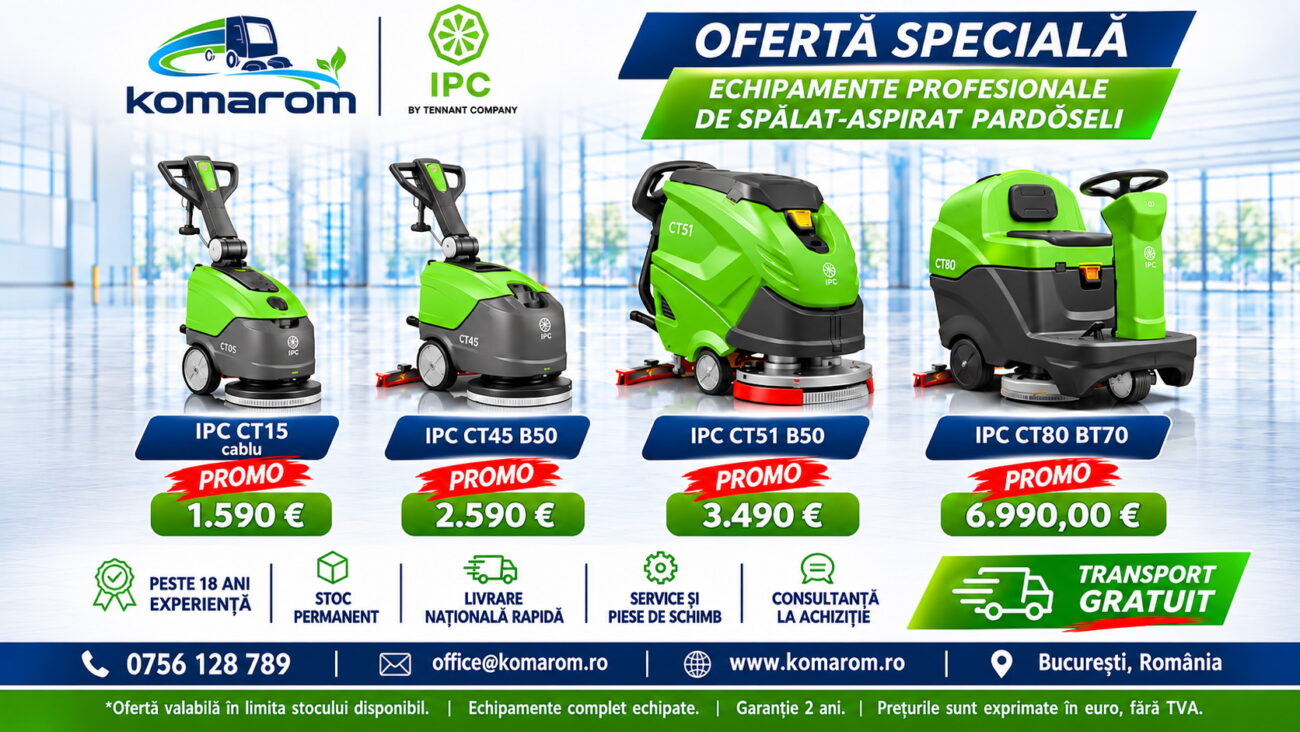
Scrubber-dryers from manufacturers such as IPC or Dr. Gansow GMATIC come in several size classes. The choice of size depends on the surface area and how busy the space is, not on price.
The Limits of a Scrubber-Dryer
The machine is not designed for sand, gravel, shavings or bulky waste. These must be removed beforehand. It also needs careful maintenance: emptying and rinsing the dirty water tank, checking the squeegee, cleaning the brushes. A neglected machine can leave streaks or liquid on the floor.
When You Need Both
In many real spaces, the question “sweep or wash?” has the answer “both, in the right order”. A common example is a production hall with forklift traffic:
- during the day, dust and material debris build up on the floor;
- at the end of the shift, a sweeper lifts the dry waste;
- then a scrubber-dryer cleans the marks and stains, without the brushes wearing down on hard particles.
This sequence protects the machines, reduces detergent consumption and gives a better result than either machine used alone. If the budget does not allow buying two machines, you can also rent one of them for peak periods or for periodic cleaning. We cover this in the section on purchase options.
Quick Comparison of the Two Solutions
The table below summarises the main differences, so you have them at hand when you talk to your team.
| Criterion | Sweeper | Scrubber-dryer |
|---|---|---|
| Cleaning type | Dry | With water and detergent |
| Dirt handled | Sand, leaves, waste, dust | Marks, light grease, stains |
| Typical spaces | Platforms, car parks, halls, squares | Hospitals, shops, halls with finished floors |
| Floor after the pass | Dust-free, but not disinfected | Clean and almost dry |
| Consumables | Filters, brushes | Water, detergent, brushes or pads |
| Main limit | Does not remove stains | Does not pick up coarse dirt |
The comparison does not name a winner. Each machine suits a certain type of dirt, and the right decision starts from your space.
Three Concrete Situations
The examples below show how the criteria apply in practice.
Large Logistics Warehouse
In a warehouse with forklift and pallet truck traffic, the main dirt is dust and sand brought in from outside. The floor is concrete, with no strict hygiene requirements. A sweeper covers the daily need. A scrubber-dryer can be used periodically, for example weekly, to remove tyre marks and stains. For such spaces, we also recommend our page on cleaning for logistics, transport and infrastructure.
Pedestrian Square Cleaned at Night
Here the dirt is outdoor and dry: leaves, packaging, sand, cigarette butts. Noise must be low, and the machine must work efficiently on paving. The solution is a street sweeper, preferably with suction to limit dust. A scrubber-dryer would not be suitable as the main machine.
Hospital or Clinic
In a hospital, floors are smooth, indoor and subject to strict hygiene requirements. Coarse dust is absent, but marks and fixed dirt must be removed daily. Here a scrubber-dryer is the normal choice, and sweeping can be done manually or with a professional vacuum cleaner in narrow areas.
Questions to Ask Yourself Before Choosing
Before requesting a quote, answer a few simple questions. They reduce the risk of an unsuitable choice.
- What type of dirt predominates? Dry, sticky or mixed?
- What area do you need to clean and how often? A 5,000 sqm hall cleaned daily needs a different machine from one cleaned once a week.
- What type of floor do you have? Concrete, epoxy, tiles, asphalt, paving?
- Do you work indoors, outdoors or both?
- Are there requirements for noise, dust or hygiene?
- How many operators do you have available and how much time do they have for cleaning?
- How is the machine charged and where is the space for charging and storage?
With these answers, an advisor can determine whether you need one machine, two or a combined solution.
Buy, Rent or Choose a Refurbished Machine
Once you have decided on the type of machine, the financial decision follows. There is no single right option for everyone, only one that fits your frequency of use and budget.
Buying a new machine makes sense when you use it daily or weekly and expect to use it for several years. You get the exact configuration you need and after-sales service.
Renting suits occasional needs: a general clean after a construction site, a peak period, an event. Before buying, renting also lets you test a type of machine in real conditions. You will find the details on the page about cleaning equipment rental.
Refurbished machines can be enough when the budget is limited and the workload is not extreme. They have limits, and the condition of each machine must be checked individually. You can see the current offer on the page with refurbished cleaning machines.
There are other financing options too: leasing, instalment payments, buy back for worn machines and trade in, meaning the exchange of an old machine for a new one. For buyers in the public sector or in agriculture, we also offer free consultancy for purchases through SEAP, AFIR and European funds.
How Komarom Helps You Choose the Right Machine
We have been active in professional cleaning equipment since 2008. We work with internationally recognised manufacturers, including IPC, Dr. Gansow GMATIC, Dulevo, Green Machines and Du Puy. But what matters more is how we work with you:
- We start from the space, not from the catalogue. We ask about surface area, floor type, dirt and working schedule, then recommend the right machine. Not the most expensive one.
- We compare options honestly. If a sweeper is enough, we tell you so. If you need both, we explain why and in what order.
- We cover the whole cycle. New machines, refurbished machines, rental, leasing, buy back, trade in, spare parts, consumables and after-sales service.
- We support you through the purchase. Free consultancy for SEAP, AFIR and European funds helps you prepare the application correctly.
If you work in industry, you will find more information on our page about equipment for industrial and manufacturing cleaning.
Conclusion: Choose by Dirt and Space, Not by Habit
A floor sweeper lifts dry dirt and suits large surfaces, heavy traffic and outdoor or semi-outdoor spaces. A scrubber-dryer removes fixed dirt and leaves the floor clean and almost dry, especially indoors. For many halls and platforms, industrial sweepers and scrubber-dryers do not exclude each other, they complement each other.
The right choice depends on the type of dirt, the surface area, the type of floor and how often you use the machine. If these data are clear, the decision becomes simple. If they are not, a conversation is worth having before you buy.
If you would like us to check together what suits your space, you can write to us or call us. We will ask you a few questions about the surface area and working schedule and tell you which machine we recommend and why, with no obligation. You can request a quote or ask for a consultation, and we will come back with a clear recommendation.