



Floor cleaning in supermarkets and minimarkets – IPC CT15 & IPC CT51
In supermarkets and minimarkets, floor cleaning could require daily, quick interventions, adapted both to the floor area of the store and to the layout of the store sections. Using the IPC CT15 and IPC CT51 models could make it possible to choose the right equipment according to the size of the location and the space available for manoeuvring.
- Client
- Confidential client – store network
- Industry
- Commercial, Offices & HoReCa
- Solution
- Mechanised floor cleaning in supermarkets and minimarkets
- Equipment
- IPC CT15 and IPC CT51
The challenge
A store network could include locations with different floor areas and layouts, from compact minimarkets to supermarkets with larger retail areas.
The daily traffic of customers and staff could generate dust, shoe marks, dirt brought in from outside, trolley marks, accidentally spilled liquids and other debris specific to commercial activity.
Floor cleaning could be carried out daily, with additional interventions at the entrances, in the checkout areas, in heavily trafficked aisles or in the event of accidental soiling.
In minimarkets, the main difficulties could be the narrow aisles, the shelves, the checkout areas and the limited space for manoeuvring the equipment.
In larger supermarkets, the challenge could shift towards productivity and the need to cover a larger area within a limited time.
The main difficulties could be:
- floor areas that differ from one location to another;
- aisles bounded by shelves;
- frequent customer traffic;
- dirt brought in from outside;
- repeated interventions throughout the day;
- limited space for manoeuvring in small stores;
- larger areas in supermarkets;
- the need to reduce manual cleaning;
- the need for efficient water recovery after washing.
What we needed to solve
For an application of this kind, the main objectives could be:
- mechanising floor cleaning in stores of different sizes;
- less time needed for daily cleaning;
- choosing the equipment according to the floor area and layout of each location;
- fewer interventions carried out with a mop;
- access between shelves and in areas with limited space;
- washing and water recovery in the same operation;
- reduced physical effort for staff;
- carrying out targeted interventions quickly.
The solution recommended by Komarom
IPC CT15 & IPC CT51
For a network made up of supermarkets and minimarkets, the Komarom Trade Invest team could recommend two scrubber-dryer models adapted to different categories of surfaces: IPC CT15 and IPC CT51.
Using the two models could make it possible to size the equipment according to the floor area of the store, the width of the aisles, the level of traffic and the frequency of interventions.
IPC CT15 – for minimarkets and compact spaces
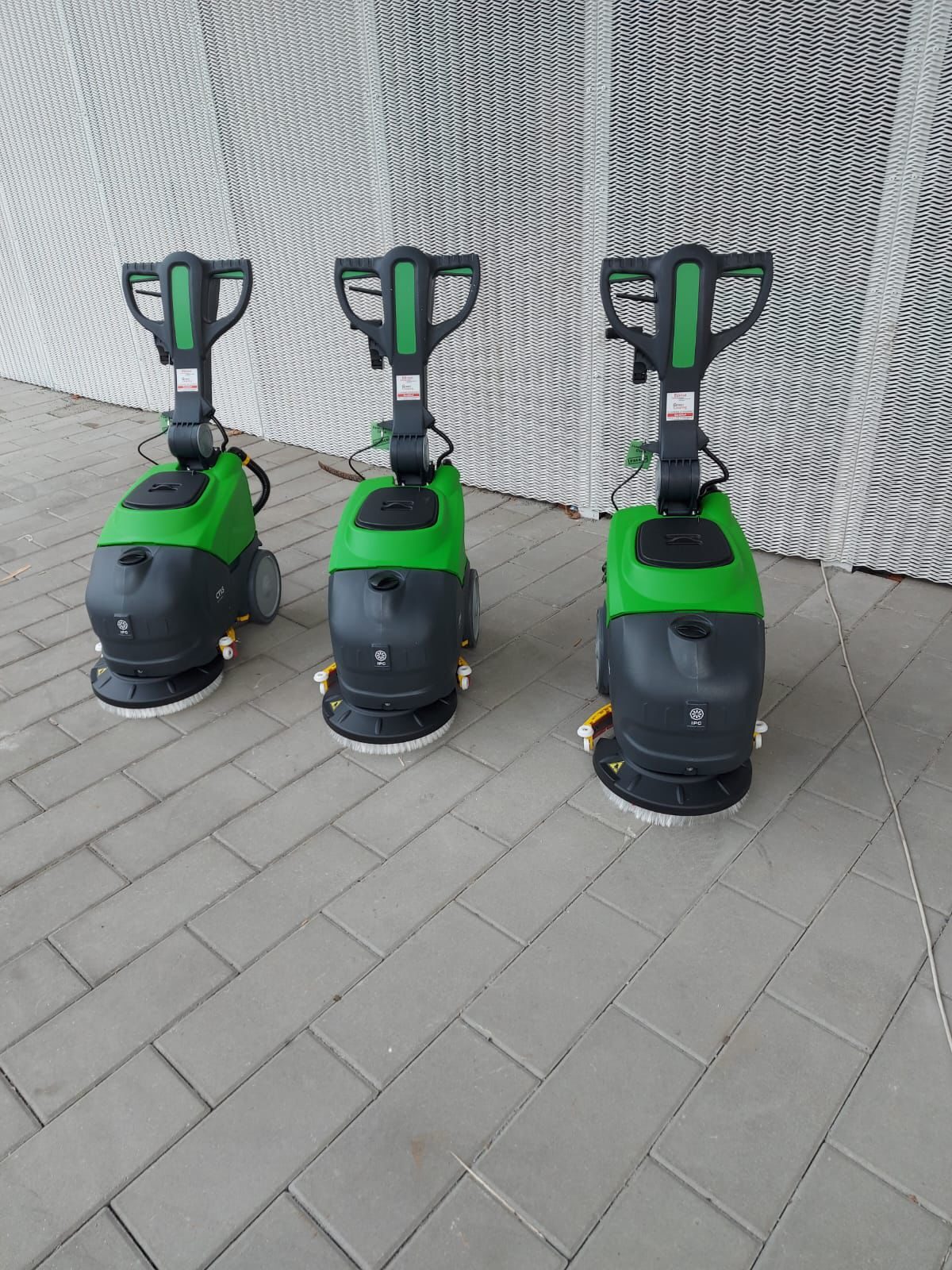
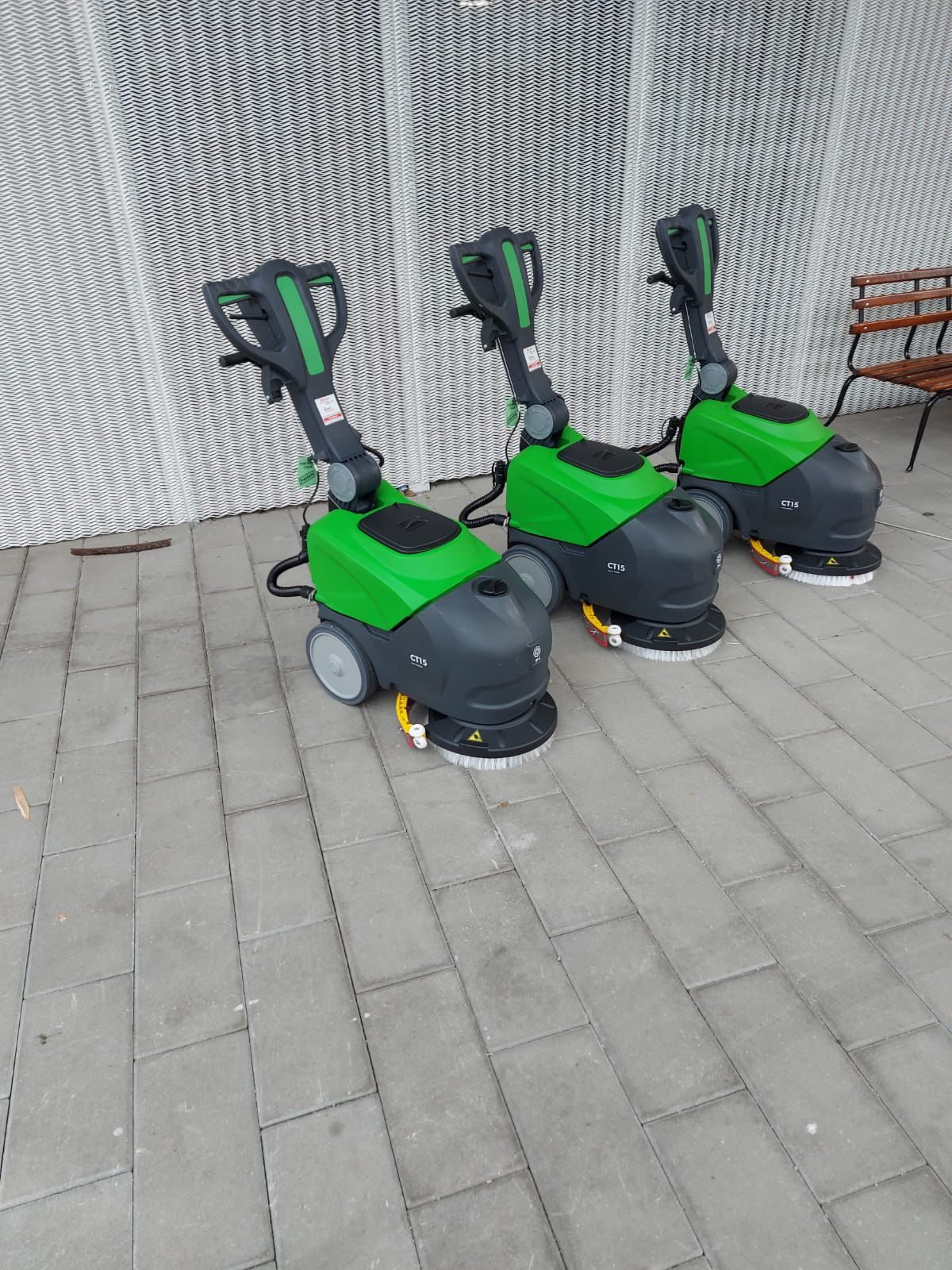
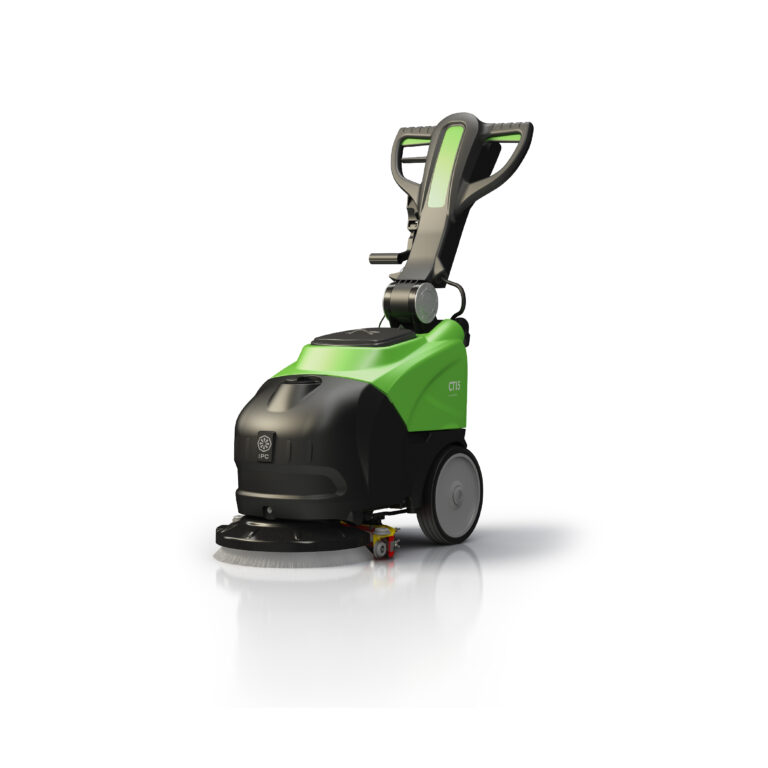
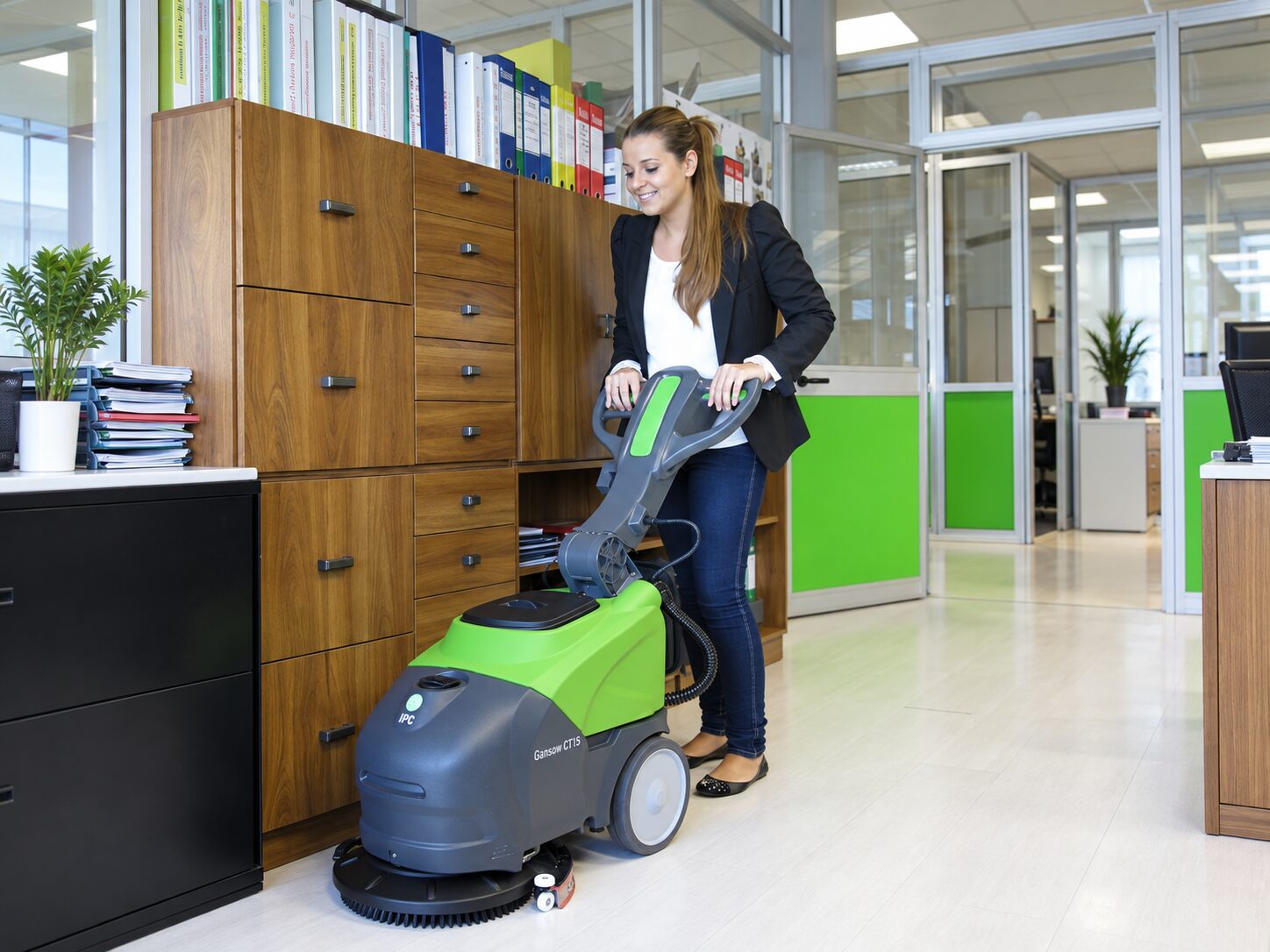
The IPC CT15 could be suitable for minimarkets, convenience stores and compact commercial areas, where manoeuvrability and small dimensions are important criteria.
The compact format could make it easier to move between shelves, in the checkout areas and in other spaces where using a larger machine would be difficult.
The model could be used both for scheduled cleaning and for targeted interventions throughout the day.
IPC CT51 – for supermarkets and larger areas
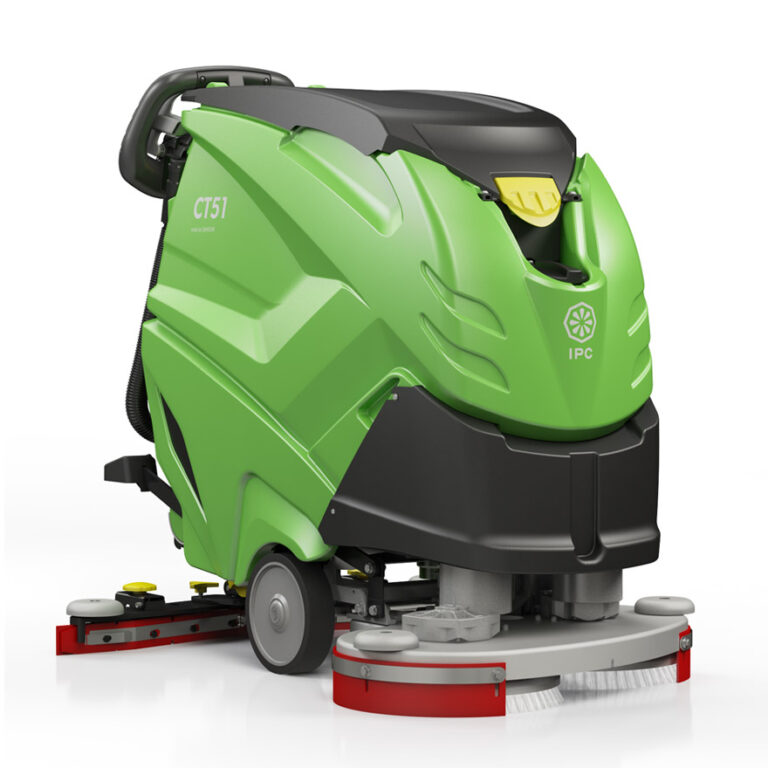
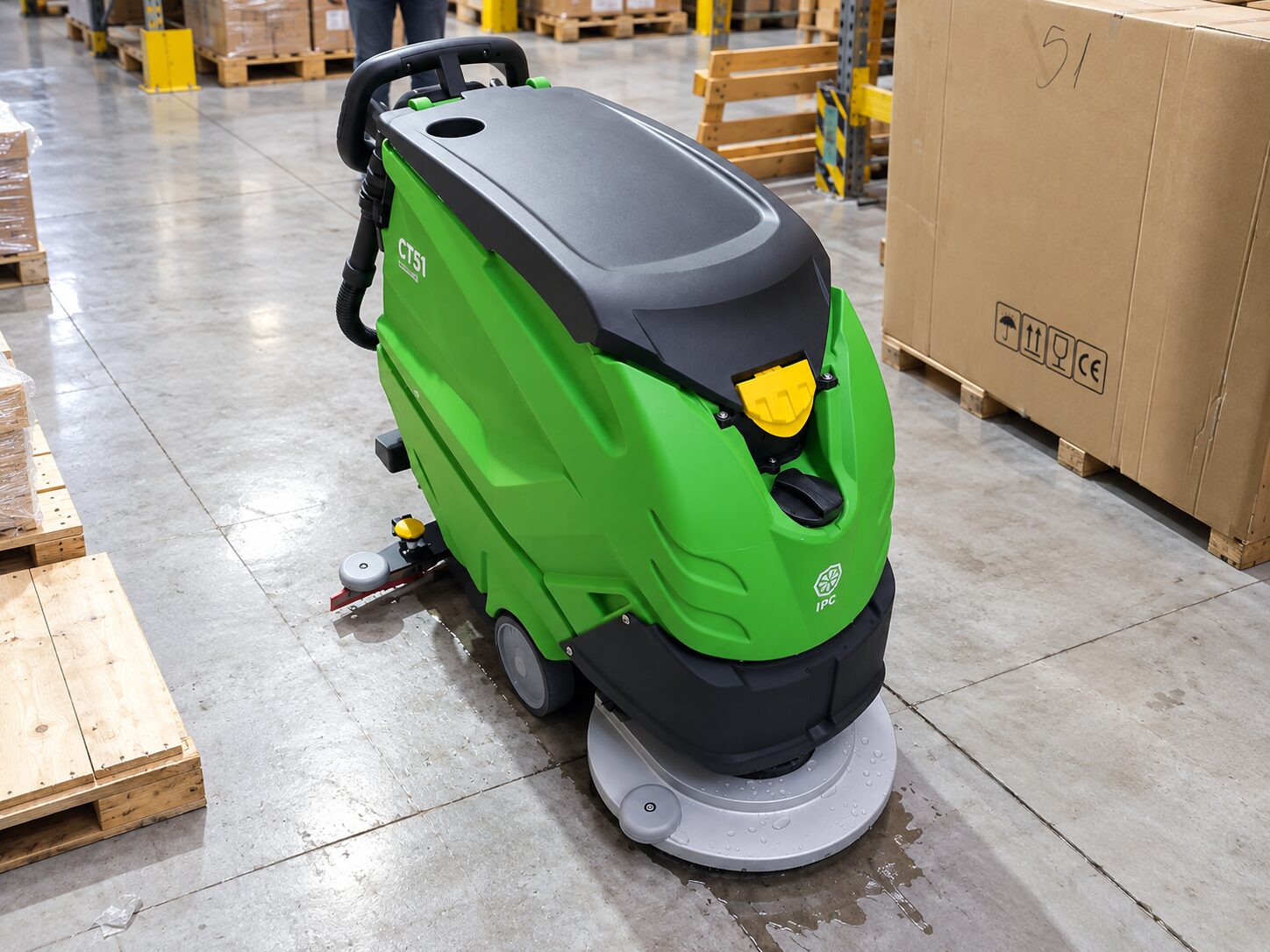
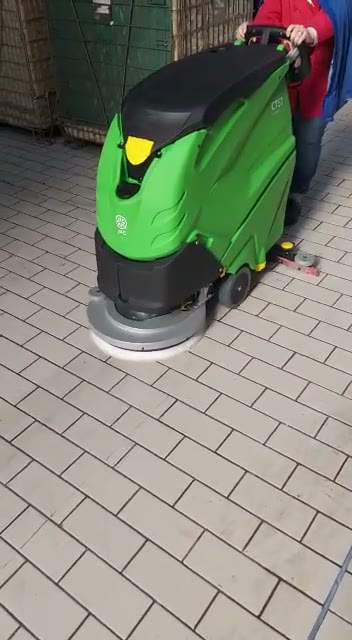
For supermarkets and more extensive commercial areas, the IPC CT51 could offer a balance between productivity, capacity and manoeuvrability.
The equipment could be used for cleaning aisles, access areas, the spaces near the checkouts and other compatible commercial surfaces.
Compared with equipment designed for very compact spaces, the IPC CT51 could allow larger areas to be covered more efficiently, while retaining the manoeuvrability needed in a commercial environment.
The right equipment for each type of store
In the case of a retail network, using a single model for all locations would not always be the most efficient solution.
The IPC CT15 could be allocated to compact stores, where small dimensions and manoeuvrability are the priority, while the IPC CT51 could be used in locations with larger floor areas and a greater need for productivity.
Both models could allow washing and water recovery to be carried out within the same operation.
The brushes, pads and cleaning solutions could be selected according to the type of floor and the nature of the dirt.
A demonstration at representative locations could help determine the right model for each category of store.
Implementation
The implementation process could include:
- Location analysis
- Classification by floor area and layout
- IPC CT15 /
IPC CT51 recommendation - Demonstration/
Testing - Configuration
- Delivery
- Training
- Support
In the case of a retail network, the analysis could begin by classifying the stores according to floor area, aisle width, shelf layout, floor type and cleaning frequency.
For compact locations, the use of the IPC CT15 could be analysed, while for supermarkets with larger floor areas the IPC CT51 could be evaluated.
Testing in a few representative locations could make it possible to check the manoeuvrability, the cleaning result and the integration of the equipment into the stores' schedules.
Once the right configuration has been established, the machines could be distributed according to the characteristics of each location.
The operators could benefit from training on correct use, battery charging and daily checking and maintenance operations.
Komarom could subsequently provide technical support, consumables, spare parts and dedicated servicing.
The results
Using the IPC CT15 and IPC CT51 in a store network could contribute to:
- less time needed to clean the floors;
- mechanising operations previously carried out by hand;
- choosing equipment appropriately sized for each type of store;
- a larger area covered by one operator;
- reduced physical effort for staff;
- washing and water recovery in a single operation;
- less water left on the floor;
- faster interventions in heavily trafficked areas;
- more uniform results across locations;
- standardisation of the cleaning process across the network.
In the case of a network with stores of different sizes, an important advantage could be sizing the equipment according to each type of location, instead of using the same model regardless of floor area and layout.
The IPC CT15 could meet the requirements of compact stores, while the IPC CT51 could provide the productivity needed by supermarkets with larger floor areas.
Testimonial
“The IPC CT15 and IPC CT51 machines have helped us make floor cleaning more efficient and standardised across the stores in our network. The IPC CT15 is compact and easy to manoeuvre between the shelves of our minimarkets, while the IPC CT51 provides the productivity needed by supermarkets with larger surfaces. Using the two models allows us to reduce cleaning time and staff effort, with uniform results in every location. Our collaboration with the Komarom team has been very good, from analysing our needs and choosing the right equipment through to delivery, operator training and the technical support provided. We are satisfied with the machines’ performance and with the efficiency achieved in our daily work.”
The project in pictures
Do you have a similar challenge?
Do you manage a network of supermarkets, minimarkets, convenience stores or other commercial spaces and are you looking for a solution for mechanising floor cleaning?
Tell us the floor area of the stores, the width of the aisles, the floor type and the cleaning frequency.
The Komarom Trade Invest team can help you choose the right equipment for each type of location and build a unified solution for the entire network.


